

Last updated: April 28, 2026
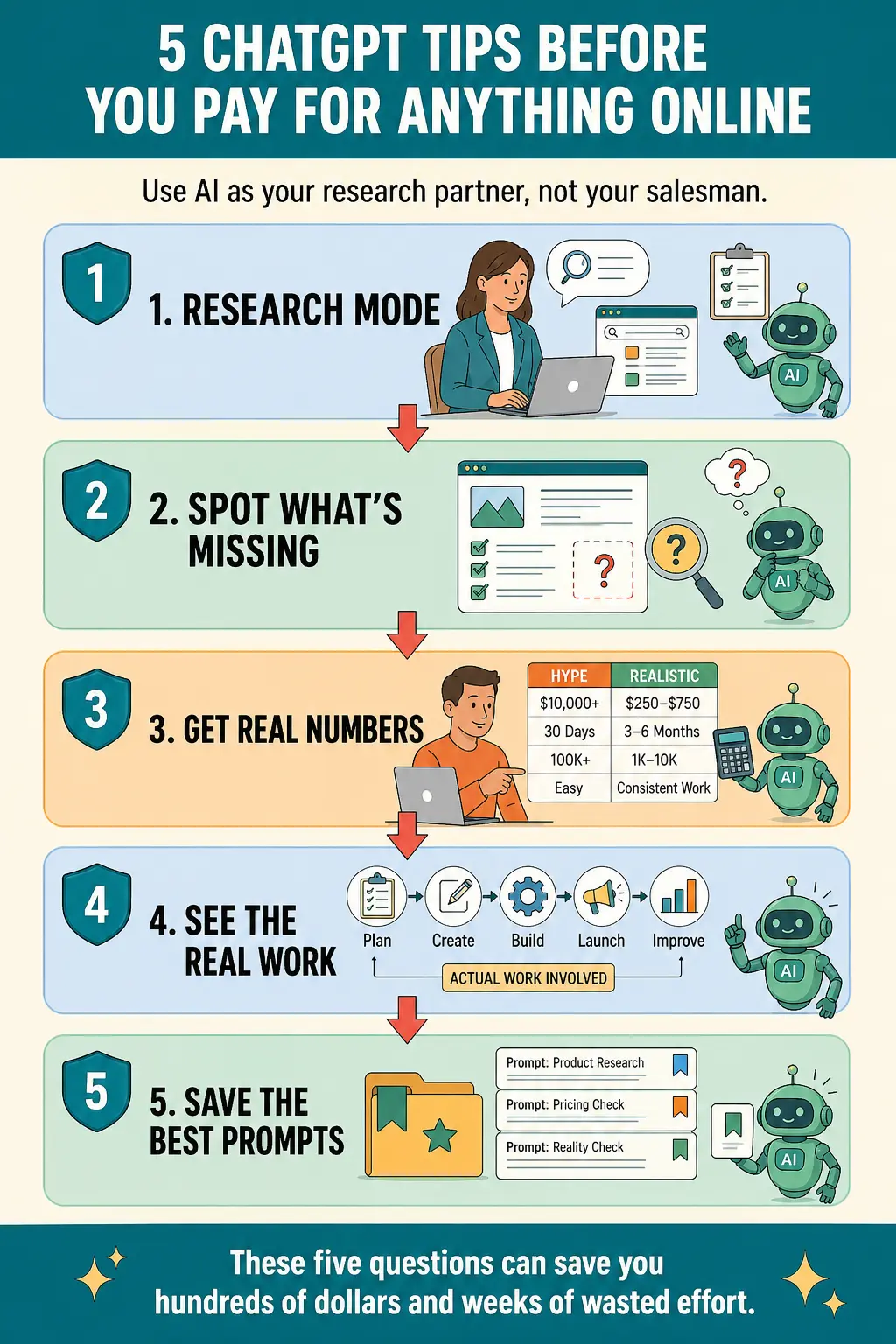
If you have been looking at AI courses, affiliate marketing programs, or “earn online” offers and trying to figure out what is real and what is hype, ChatGPT can actually help. But only if you use it the right way.
Most beginner advice on ChatGPT is written for people who already have a website, an audience, or a product to sell. That is not where most readers actually are. A lot of you are still in the research stage. You are weighing ideas, watching YouTube videos that promise easy money, looking at courses, and wondering whether any of it is worth your time or your wallet.
These five tips are for that stage. They will not turn you into a content machine. They will help you stay sharp, ask better questions, and avoid paying for something that does not deliver what it promises.
Quick Navigation
Tip 1: Tell ChatGPT You Are Researching, Not Buying
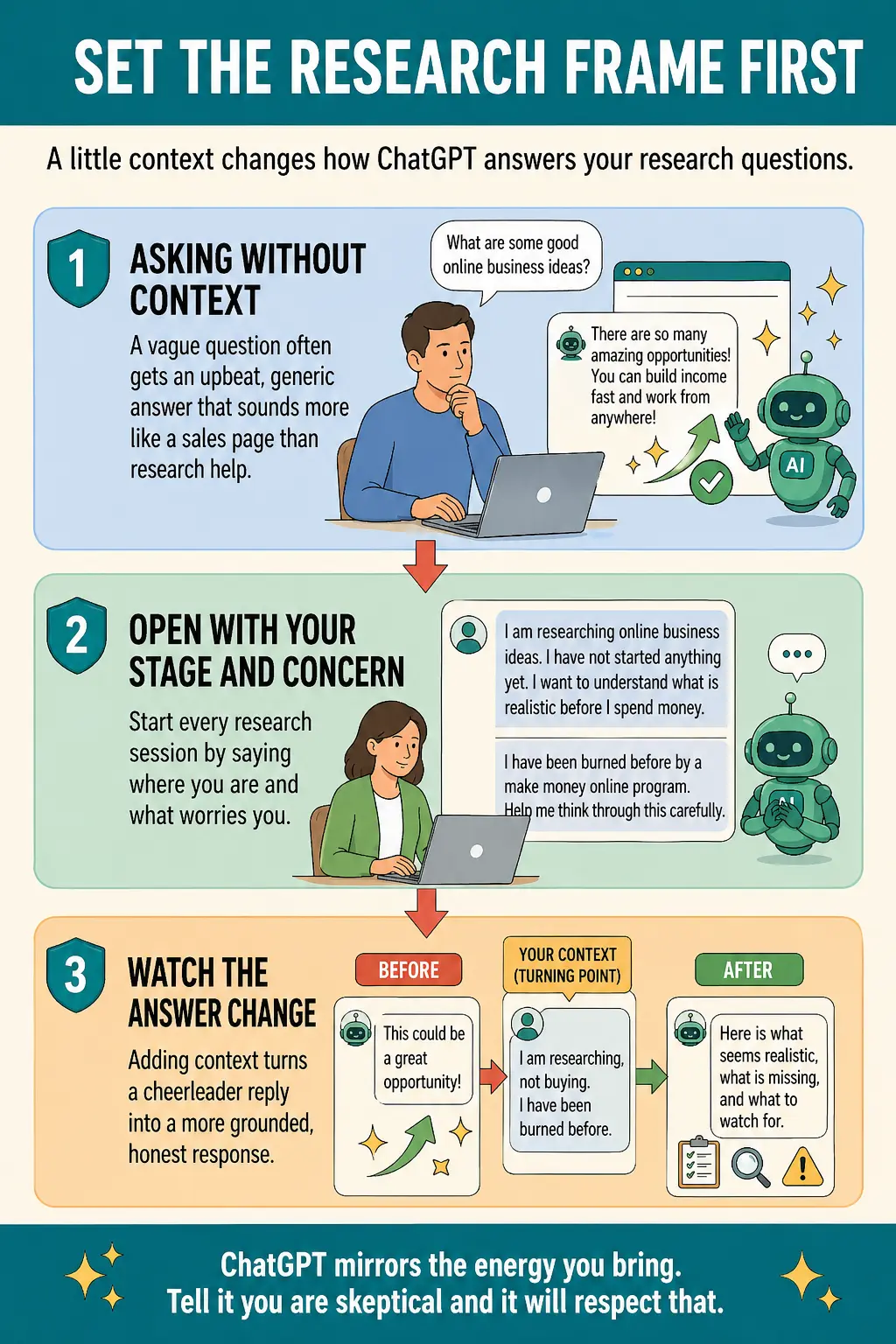
Before you ask anything, set the scene. Type a short line like “I am researching online business ideas. I have not started anything yet. I want to understand what is realistic before I spend money.”
That one sentence changes the kind of answer you get. Without it, ChatGPT often defaults to upbeat, encouraging language that sounds a lot like a sales page. With it, you get answers that respect where you actually are. Cautious, curious, and not ready to be pitched.
You can also tell it your real concern. “I have been burned before by a make money online program. Help me think through this carefully.” That kind of context filters out a lot of fluff and gets you a more grounded reply.
Tip 2: Paste the Sales Page and Ask What Is Missing
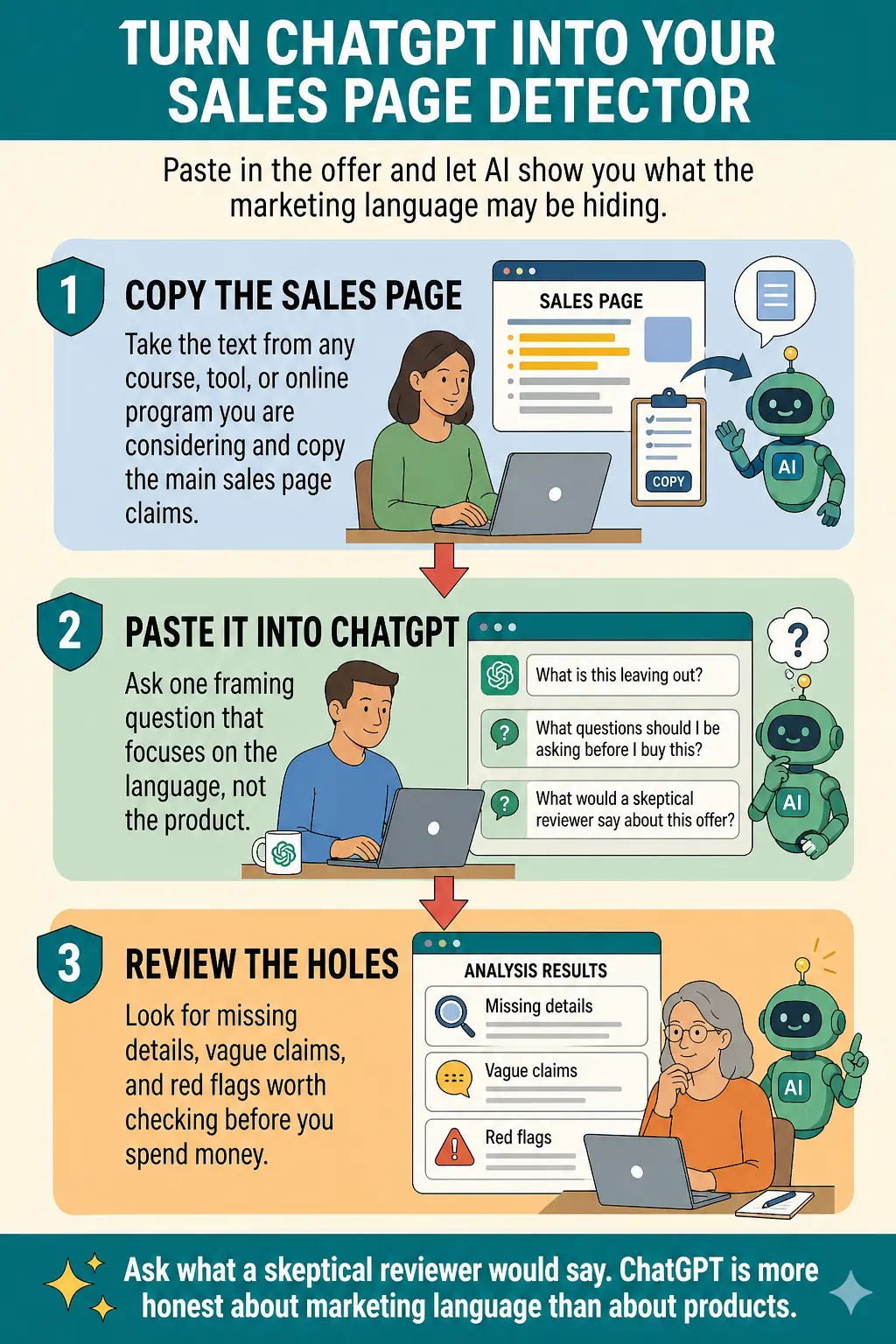
This is the one most people never try. When you find a course, tool, or program that interests you, copy the sales page text and paste it into ChatGPT. Then ask: “What is this leaving out? What questions should I be asking before I buy this?”
The answers will surprise you. ChatGPT will often spot the same vague claims, missing details, and unrealistic promises that an experienced reviewer would notice. It will not nail every one. But it will give you a list of holes worth investigating before you pay anything.
You can also ask “What would a skeptical reviewer say about this offer?” That framing tends to pull better answers than “Is this a scam?” because ChatGPT is hesitant to label specific products. It is more comfortable analyzing the marketing language. Use that to your advantage.
Tip 3: Ask for the Realistic Version, Not Just a Yes or No
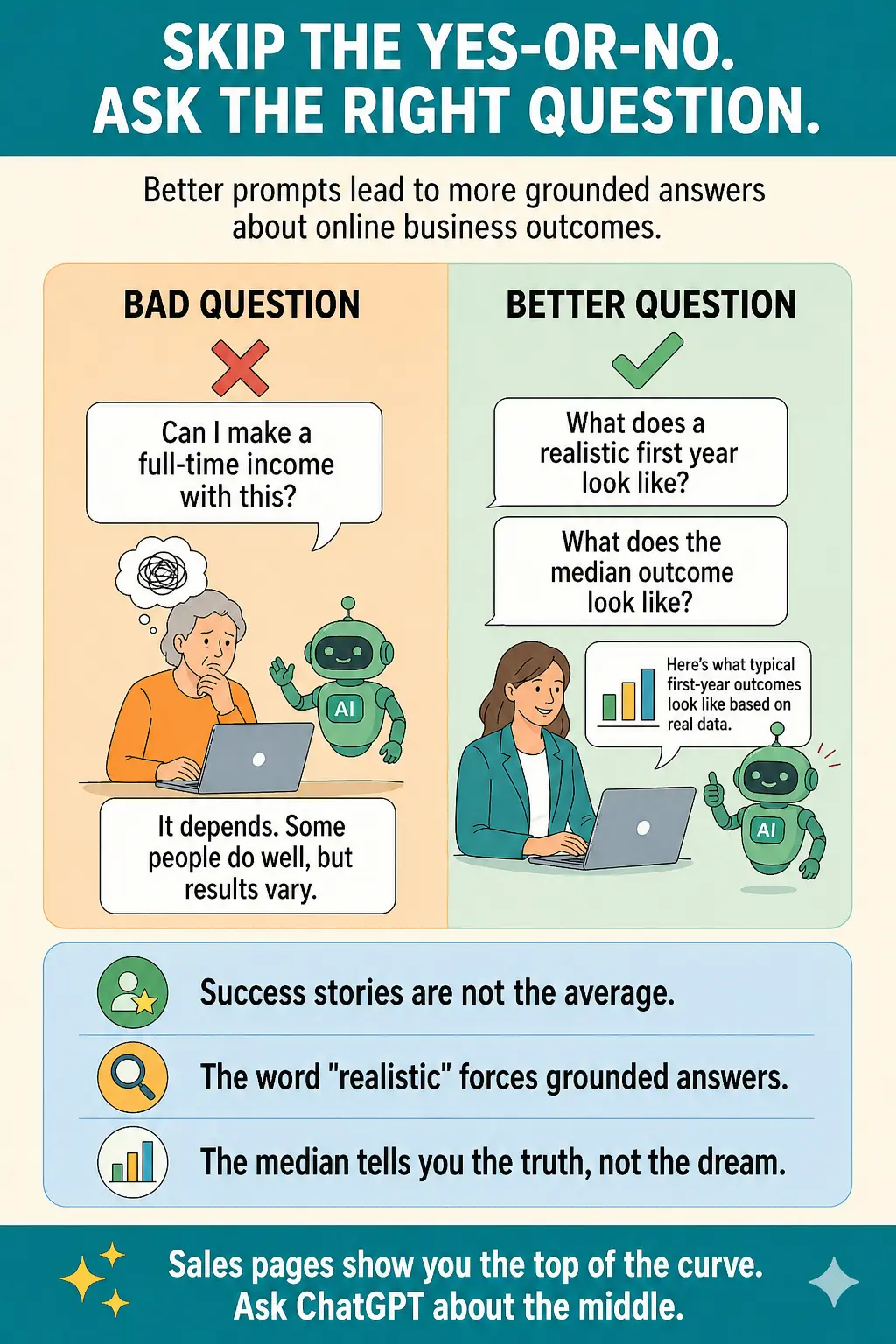
If you ask ChatGPT “Can I make 10,000 dollars a month with affiliate marketing?” you will get a wishy washy answer. Do not waste your time on yes or no questions about income.
Ask better ones. Try “What does a realistic first year look like for someone starting affiliate marketing today with no audience?” Or “What does the median outcome look like for people who buy this kind of course?”
The word “realistic” matters. So does asking about the median, not the top. Most marketing for these offers leans on the success stories. Asking about the average pulls you back to ground level, where the real decision lives.
Tip 4: Force It to Show the Actual Work Involved
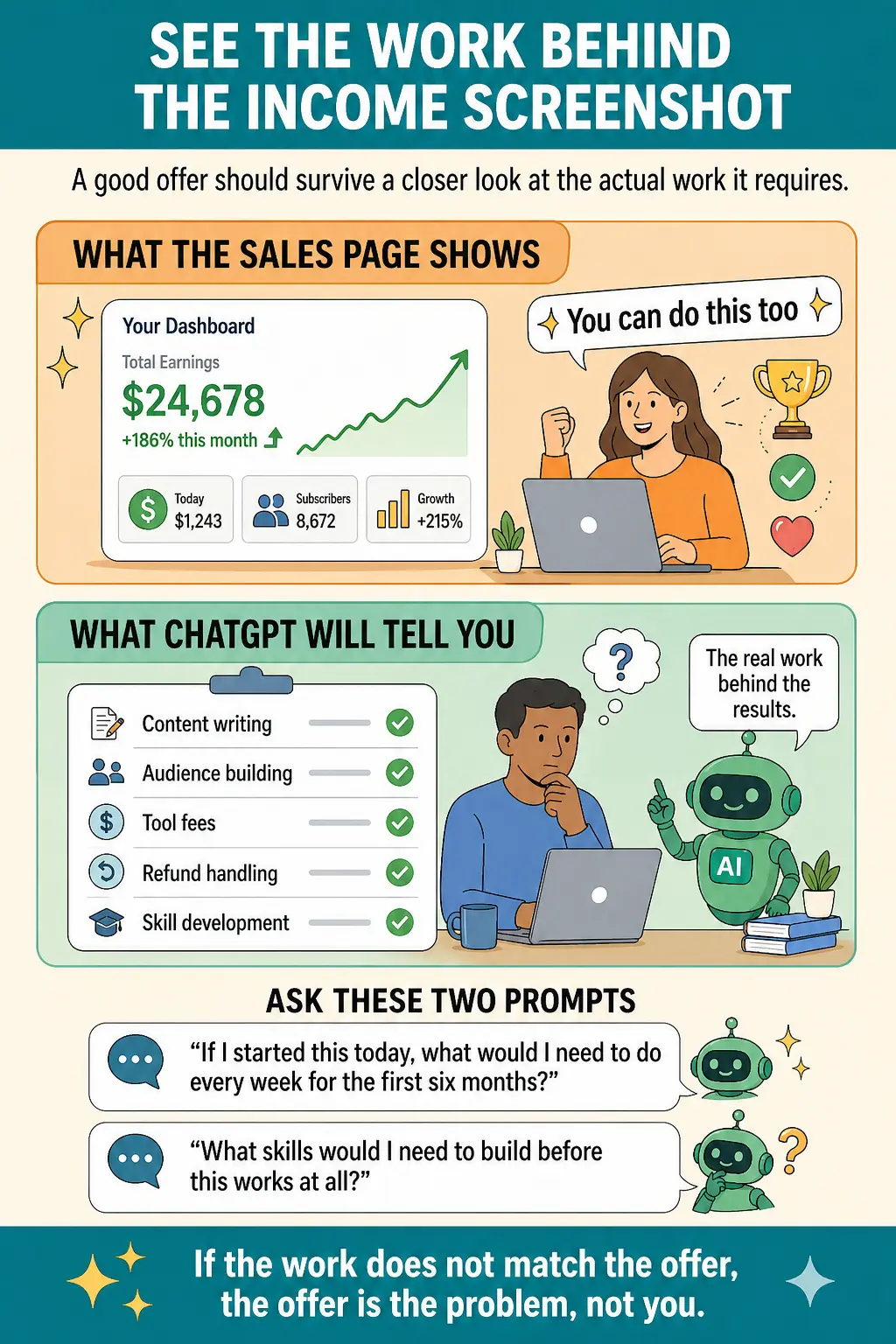
One of the easiest ways to get fooled is to fall in love with the result without understanding the work. Sales pages love showing you the income screenshot. They are less excited to show you the 18 months of failed posts, refund chasing, and tool fees that came before it.
Ask ChatGPT to break down what the work actually looks like. “If I started this today, what would I need to do every week for the first six months?” Or “What skills would I need to build before this works at all?”
You will often realize the offer you were considering does not match the work it requires. That is a great moment to have. Better to find out for free than after you have paid for a course you will never finish.
Tip 5: Save Your Skeptic Prompts So You Can Reuse Them
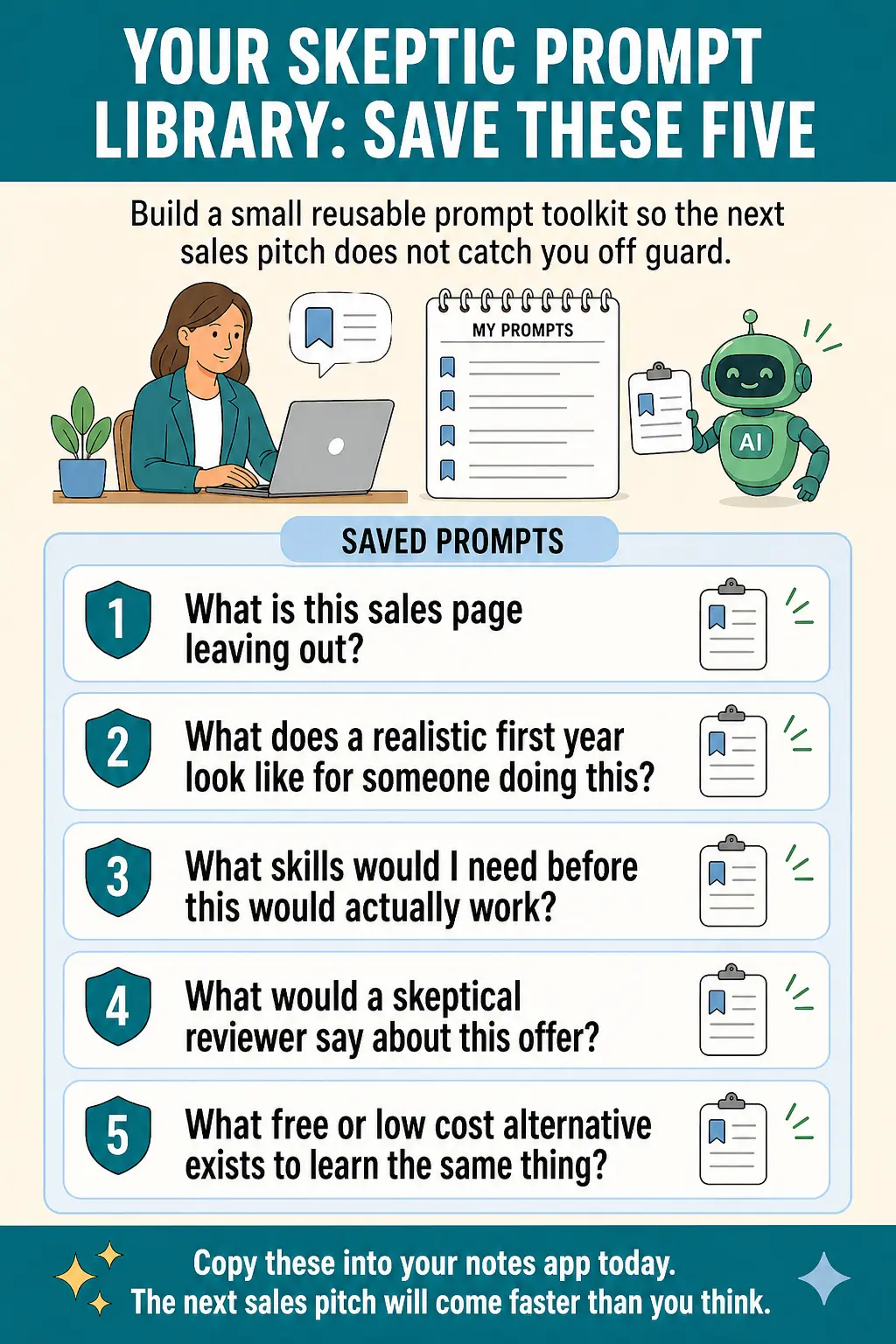
Every time you find a research prompt that gives you useful answers, save it. Drop it in a notes app, a text file, or even just email it to yourself. You are building a small personal toolkit for evaluating future offers.
Some prompts worth saving:
- “What is this sales page leaving out?”
- “What does a realistic first year look like for someone doing this?”
- “What skills would I need before this would actually work?”
- “What would a skeptical reviewer say about this offer?”
- “What free or low cost alternative exists to learn the same thing?”
Over time these become muscle memory. The next time someone tries to sell you a 2,000 dollar course on AI affiliate marketing, you will already have the questions ready before you reach for your wallet.
None of this turns ChatGPT into a perfect lie detector. It is not one. It will sometimes get things wrong, miss the obvious, or repeat marketing language right back at you. So always cross check important claims with outside sources, reviews from people who actually tried the thing, and a bit of patience. If you want a deeper checklist on spotting bad offers, our guide on how to tell if something is a scam goes through the patterns to watch for.
Used the right way, ChatGPT is a solid research partner. It will not stop you from making mistakes. It will help you make fewer of them. And when money is on the line, fewer mistakes is exactly what saves your wallet.
Start with Tip 1 the next time you look at an online business idea. See what happens. The goal is not to become a faster buyer. It is to become a slower, smarter one.
Related Reading
If you found this useful, these three posts pair well with what you just read:
- How to Know If an AI Tool Is Actually a Scam goes through the red flags and patterns to watch for before you spend a dollar on anything.
- Before You Pay for an AI Tool or Course, Run This Five-Minute Test gives you a quick checklist to run on any tool or course you are considering.
- What ChatGPT Actually Knows vs. What It Is Guessing is essential reading if you plan to use ChatGPT as a research partner. It explains when to trust the answer and when to verify.