

Last updated: July 12, 2026
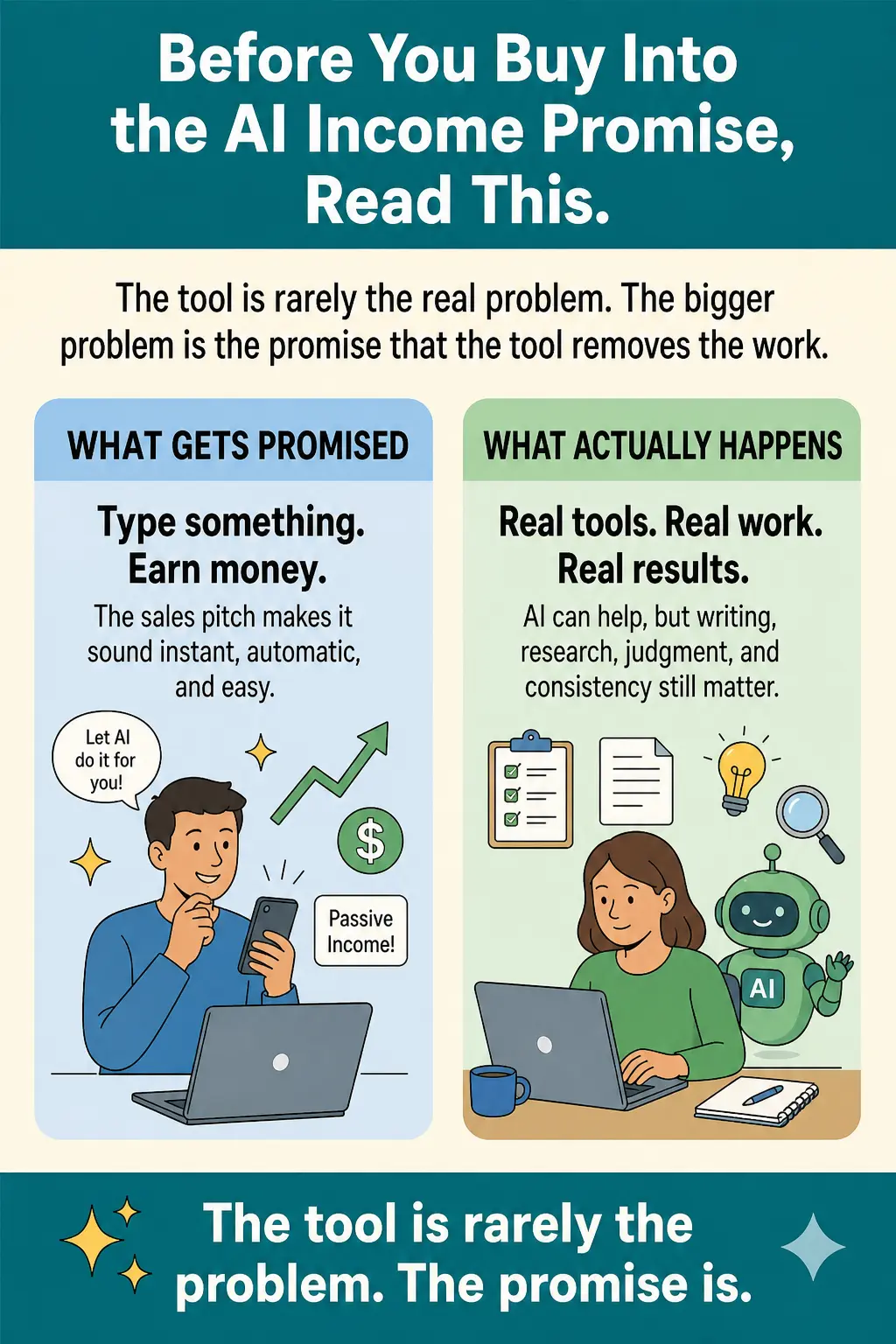
You’ve probably seen the videos. Someone shows you how they made $8,000 last month using ChatGPT and a website you’ve never heard of. The demo looks clean. The income screenshot looks real. And somewhere in the back of your mind, you’re thinking: Is this actually possible, or is this another one of those things?
That skepticism you’re carrying is worth holding onto. It has probably saved you money before. But you also keep seeing AI come up, in articles, in ads, in conversations with people who seem to be doing something with it. So you’re here, trying to figure out what’s real before you commit time or money to any of it.
That’s the right instinct. Here’s the honest version. I’ve reviewed online business offers for over 10 years, and one pattern keeps showing up: the tool is rarely the real problem. The problem is the promise that the tool removes the work.
Quick Navigation
AI Is a Tool. The Business Is Still on You.
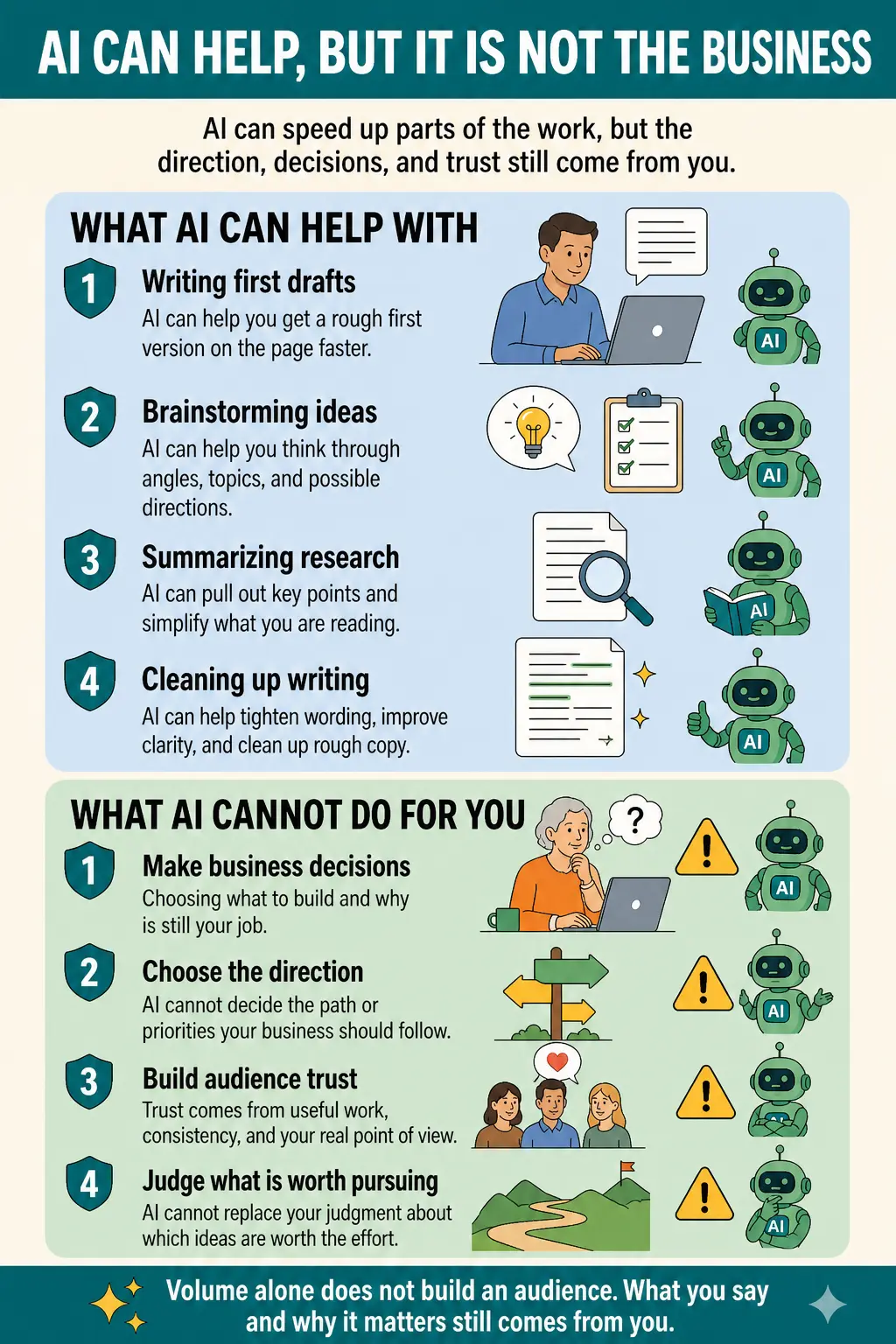
The biggest misunderstanding I see is that people come in expecting AI to be the business itself. You type something, it writes something, and somewhere in between, money appears. That is not how it works.
AI is genuinely useful. It can write a first draft faster than you can, help you think through ideas, summarize research, and clean up your writing. Those are real advantages. But the business decisions, the direction, the judgment about what’s worth building and what isn’t, that part is still yours.
Plenty of people have used AI to produce a lot of content very quickly and gotten nowhere. Volume alone doesn’t build an audience or earn trust. What you say and why it matters to a specific person is still the harder problem, and AI can’t solve that for you.
If you go in expecting a shortcut to passive income, you’ll hit a wall fast. If you go in expecting a tool that handles the repetitive parts of building something real, you’re much closer to the truth.
The Learning Curve Is Real, But Probably Not What You Think
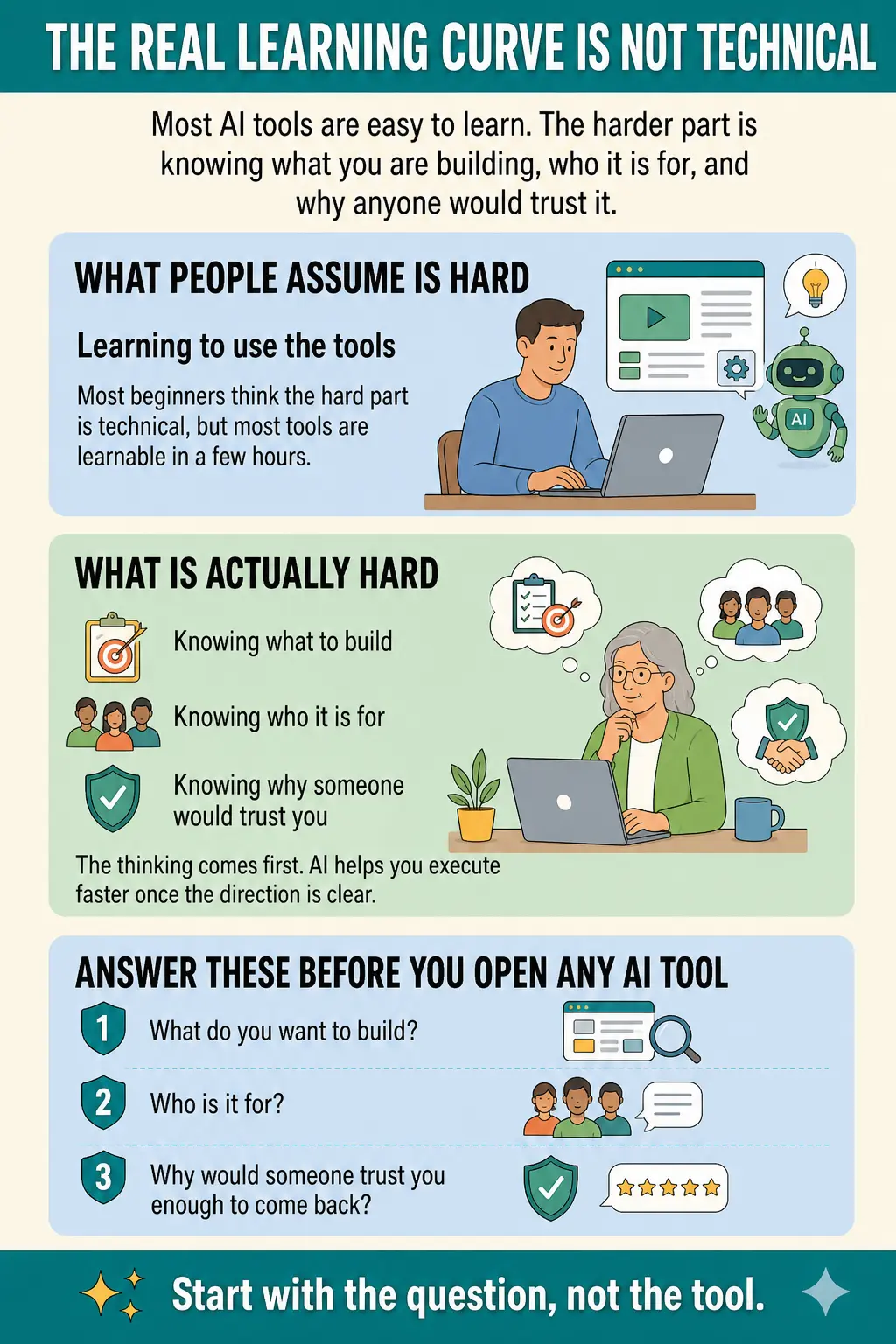
People assume the hard part of using AI is technical. It usually isn’t. Most of the tools are easy to pick up within a few hours. You don’t need a computer science degree. You don’t need to understand how the technology works under the hood.
The actual learning curve is strategic. You need to know what you’re trying to build, who it’s for, and whether the idea is sound before AI can help you build it. That judgment doesn’t come from AI. It comes from research, patience, and some honest self-assessment.
I’ve watched people spend weeks getting very comfortable with prompting ChatGPT before they had any clarity on what their site was even about. That’s backward. The thinking comes first. AI helps you execute it faster once you know what you’re doing.
Start with the question, not the tool. What do you want to build? For whom? Why would someone trust you enough to buy something through you or come back to your site? When you can answer those questions clearly, AI becomes a lot more useful.
What AI Actually Does Well (Honest Version)
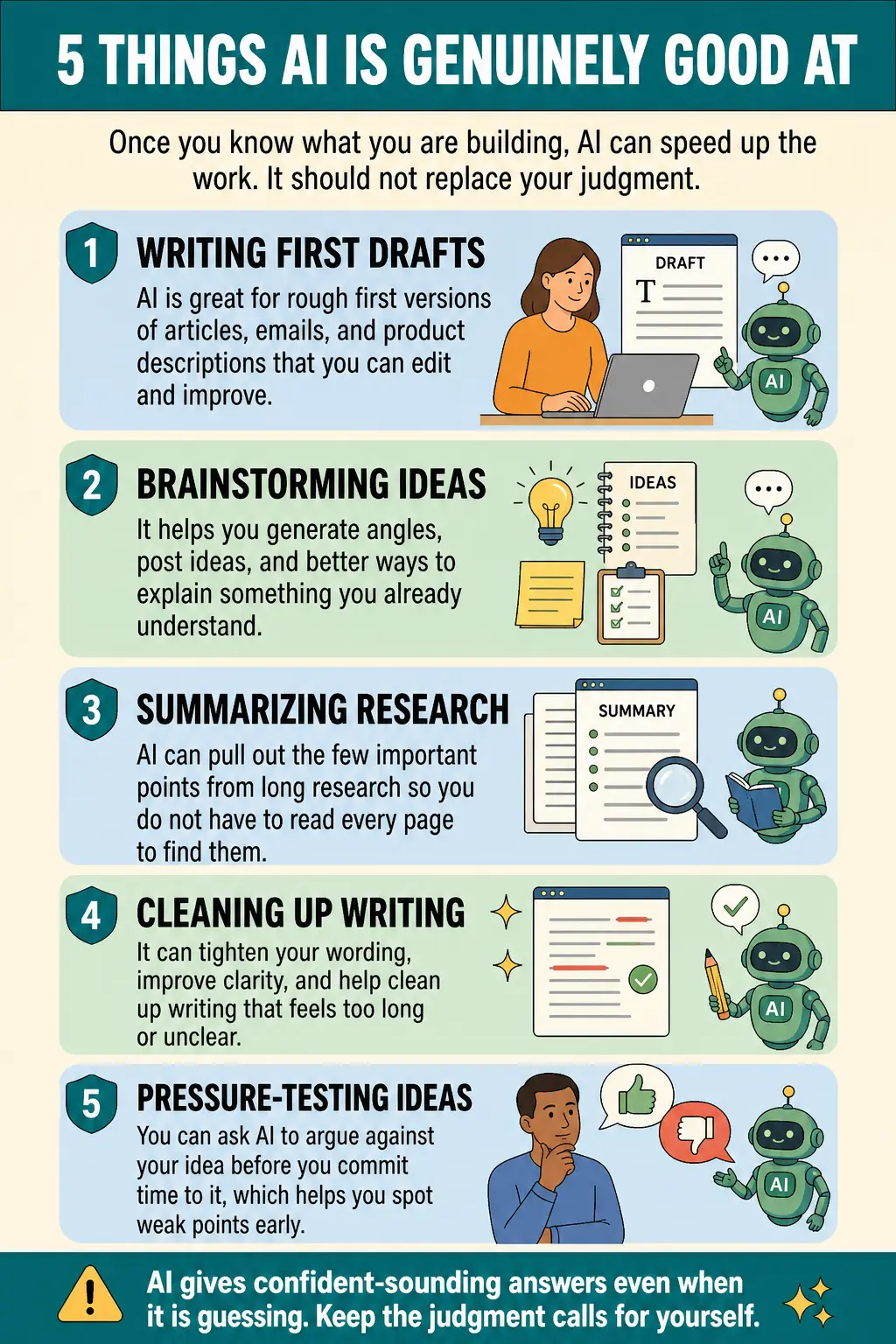
Once you have a direction, AI is genuinely good at some specific things. The key word there is specific.
- Writing first drafts of articles, emails, and product descriptions. Not final drafts, but a solid rough version to work from and edit.
- Brainstorming angles, post ideas, and different ways to explain something you already understand.
- Summarizing long research so you’re not reading a 40-page report to get the three things that actually matter to you.
- Cleaning up and tightening your own writing when it’s running too long or getting unclear.
- Pressure-testing your ideas by asking it to argue against them before you commit time to them.
These are real, practical advantages that save time on the repetitive parts of building content. They’re not magic. But they are genuinely useful once you’re pointed in the right direction.
Where AI gets people into trouble is when they rely on it for judgment calls it can’t make. Whether an audience will trust a site. Whether a business model is actually legitimate. Whether a niche has real commercial potential. For those questions, you need other sources and your own critical thinking. AI will give you a confident-sounding answer either way, which is exactly why you can’t outsource the judgment part.
What the First Few Months Actually Look Like
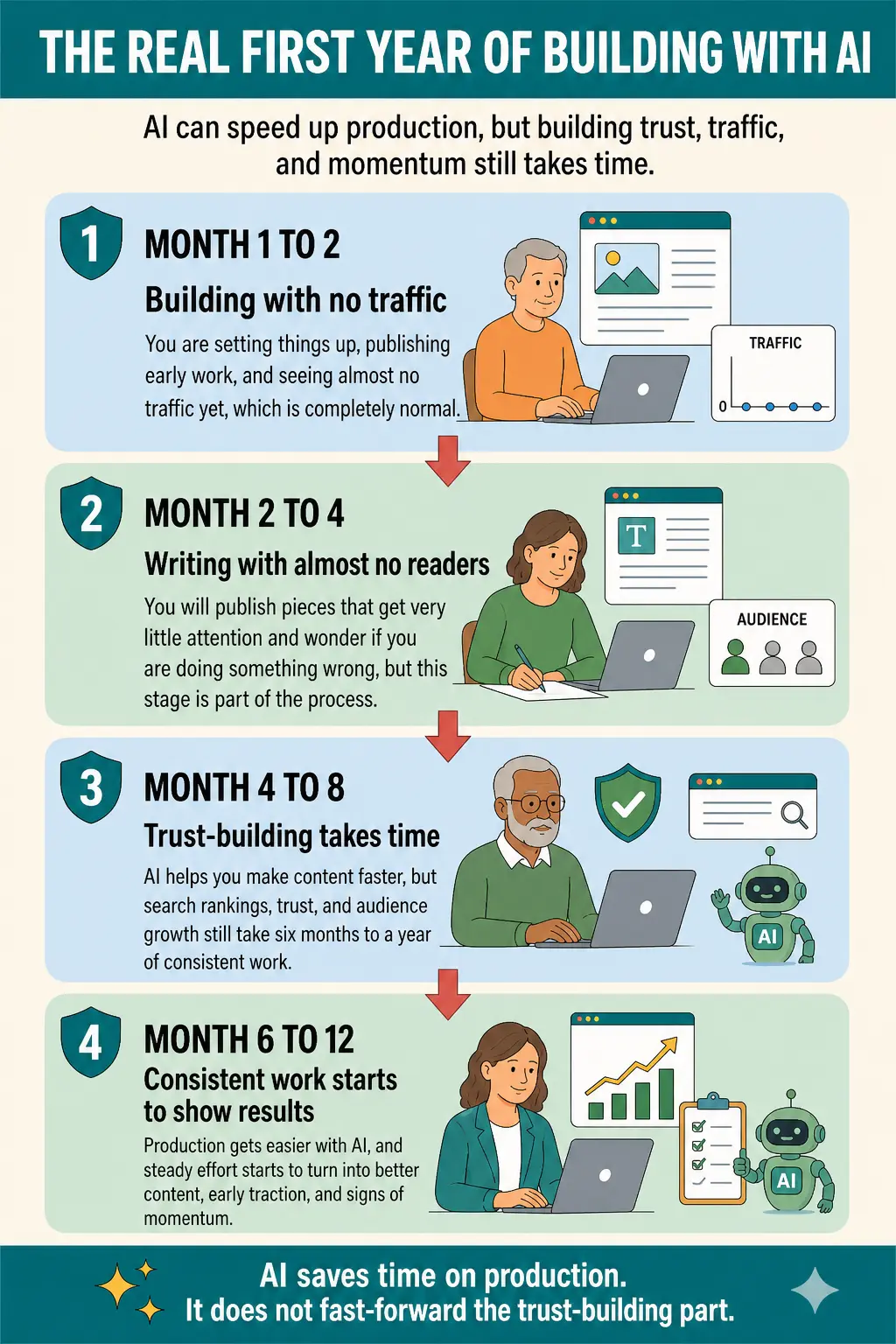
This part gets glossed over in every income screenshot and YouTube thumbnail you’ve ever seen, so I’m going to be straight with you about it.
The first few months are slow. You’ll build things that don’t get traffic. You’ll write posts that get almost no readers. You’ll wonder more than once if you’re doing something wrong. That’s normal, and it happens to almost everyone who starts without a large existing platform or a paid ads budget.
AI speeds up the production side. It does not speed up the trust-building side. Earning a reader’s confidence, getting search engines to index and rank your pages, and building a small audience that actually comes back, those things still take time. Realistically, you’re looking at six months to a year before you see anything meaningful, if you’re being consistent and building something worthwhile.
The people who get through that period are the ones who treated it like building something real, not running a fast experiment to see if money would appear. That mindset matters more than which AI tool you use.
The encouraging part is that AI can genuinely cut down the production time, especially for someone doing this on their own. Writing, researching, drafting emails, and cleaning up content, those tasks take less time than they used to. That is a real advantage for a solo builder who doesn’t have a team behind them.
One Thing to Do Before You Buy Anything
Before you pay for a course, sign up for a platform, or chase the next AI income idea you see, try this first.And if you’re not sure whether something you’re looking at is legitimate, this is a good place to start before you spend anything.
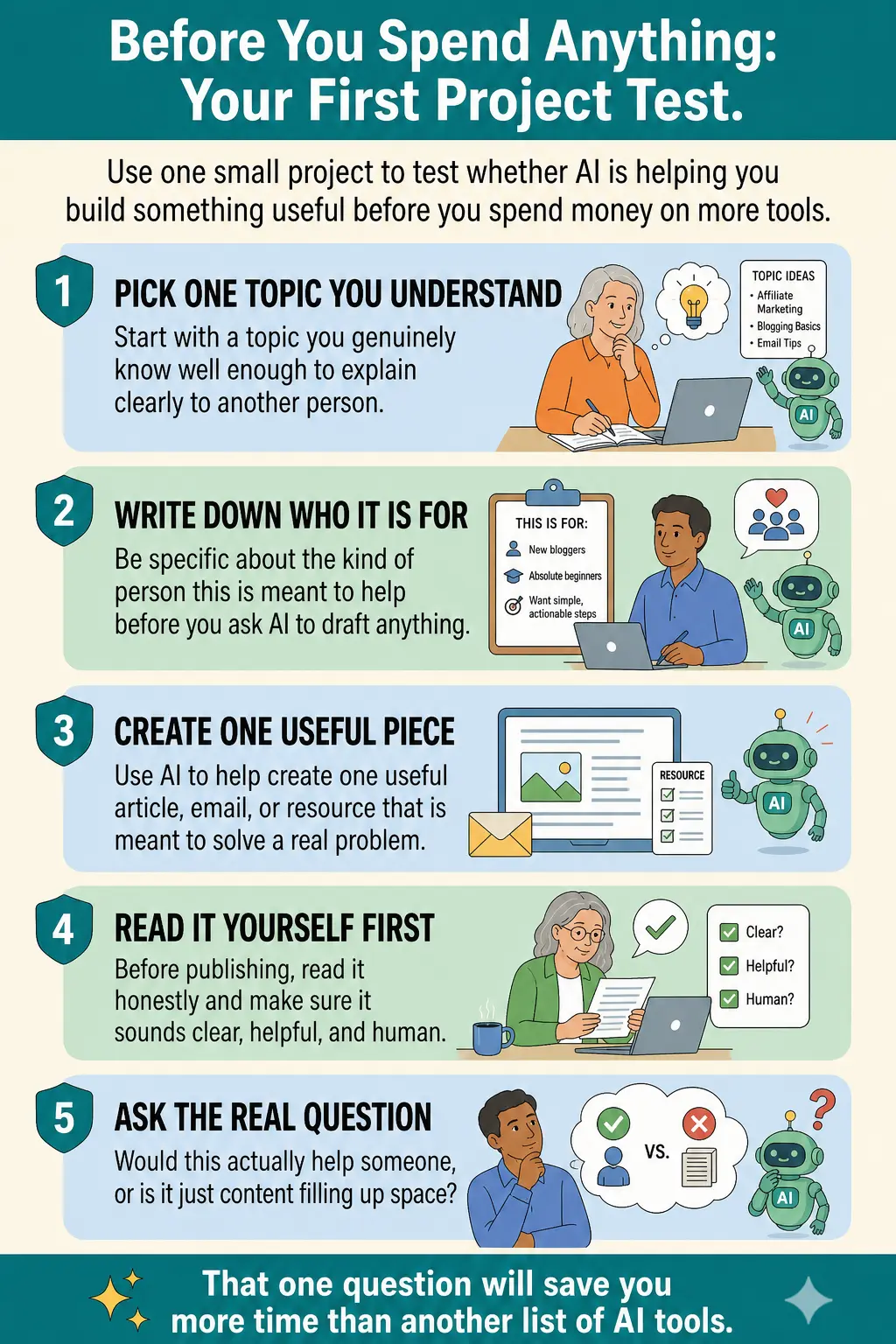
Pick one simple project. Choose one topic you actually understand. Write down who it’s for. Then use AI to help you create one useful article, email, or resource around it. When it’s done, read it yourself and ask honestly: would this actually help someone, or is it just content?
That one question will save you more time than another list of AI tools ever will.
So yes, AI makes the building part more manageable. It doesn’t replace the building part.
If that still sounds worth exploring to you, you’re probably the right kind of person for this. Come in with clear eyes, realistic expectations, and a willingness to learn what actually works over time. That combination will take you further than any tool on the market, AI-powered or otherwise.
If you want to know what that looks like for your specific situation, the AI Online Business Reality Check is a good next step. Eight questions, and it maps your time, experience, and expectations to a starting path that makes sense for you.
If you want to go deeper on a few related topics, this post breaks down what AI is actually good at versus what it’s just guessing at, and this one covers the everyday online tasks where AI genuinely saves time. Both are short reads worth your time before you spend money on any AI tool.